How AI Agents Are Revolutionizing Lead Management in 2026
Explore AI agent teams in 2026, their roles, coordination, and orchestration. Discover how multi-agent systems enhance AI workflow automation.
Imagine a world where your sales pipeline runs itself. Leads are captured, qualified, nurtured, and handed off to sales reps at the perfect moment, all without human intervention. Welcome to 2026, where AI agents are not just a futuristic concept but a daily reality for businesses aiming to stay ahead. The rise of agentic AI is transforming lead management, making it smarter, faster, and more effective than ever before.
In this article, we’ll explore how AI agents are revolutionizing lead management in 2026, the trends driving this shift, and what it means for sales teams and businesses everywhere.
What Are AI Agents, and Why Are They a Big Deal in 2026?
AI agents are autonomous software programs powered by advanced machine learning and natural language processing. Unlike traditional automation tools, these agents can make decisions, learn from data, and interact with humans and systems in a conversational, context-aware manner. In 2026, AI agents have become the backbone of enterprise workflows, especially in sales and lead management (Forbes).
Key Capabilities of Modern AI Agents
• End-to-End Automation: AI agents can manage every stage of the lead funnel, from initial capture to handoff.
• Contextual Understanding: They interpret customer intent and personalize interactions.
• Continuous Learning: AI agents improve with every interaction, refining their approach over time.
• Seamless Integration: They plug into CRMs, marketing platforms, and communication tools.
The 2026 Landscape: Why Lead Management Needed a Revolution
Traditional lead management has always been a juggling act, with manual data entry, slow follow-ups, and leads slipping through the cracks. As buyer journeys became more complex and digital touchpoints multiplied, sales teams struggled to keep up. Enter AI agents.
A recent Salesforce study found that AI adoption in lead management skyrocketed by 282% in the past two years, with agentic AI leading the charge (Salesforce). Businesses that embraced AI agents saw dramatic improvements in lead response times, conversion rates, and sales productivity.
How AI Agents Are Transforming Lead Management in 2026
1. Automated Lead Capture and Qualification
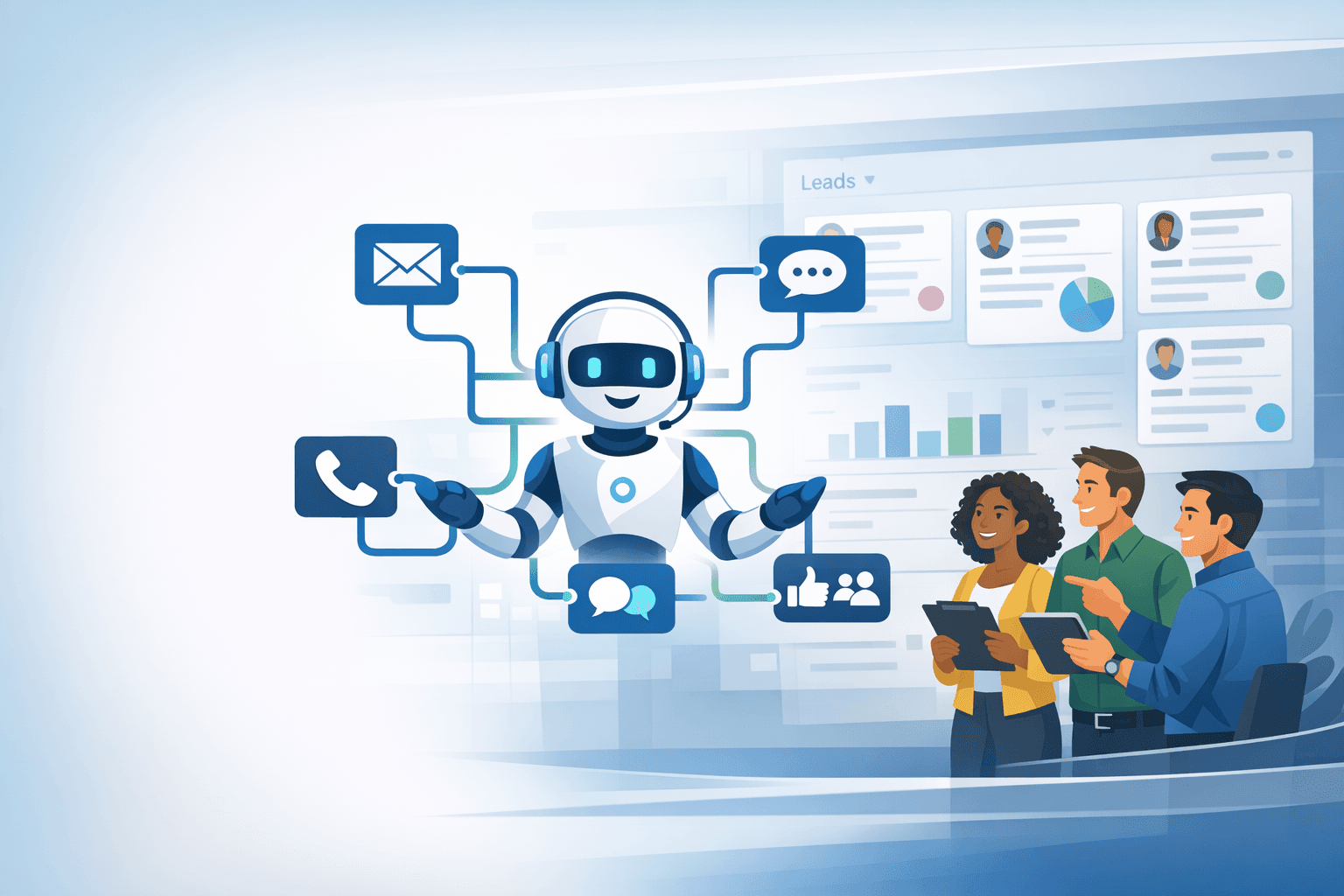
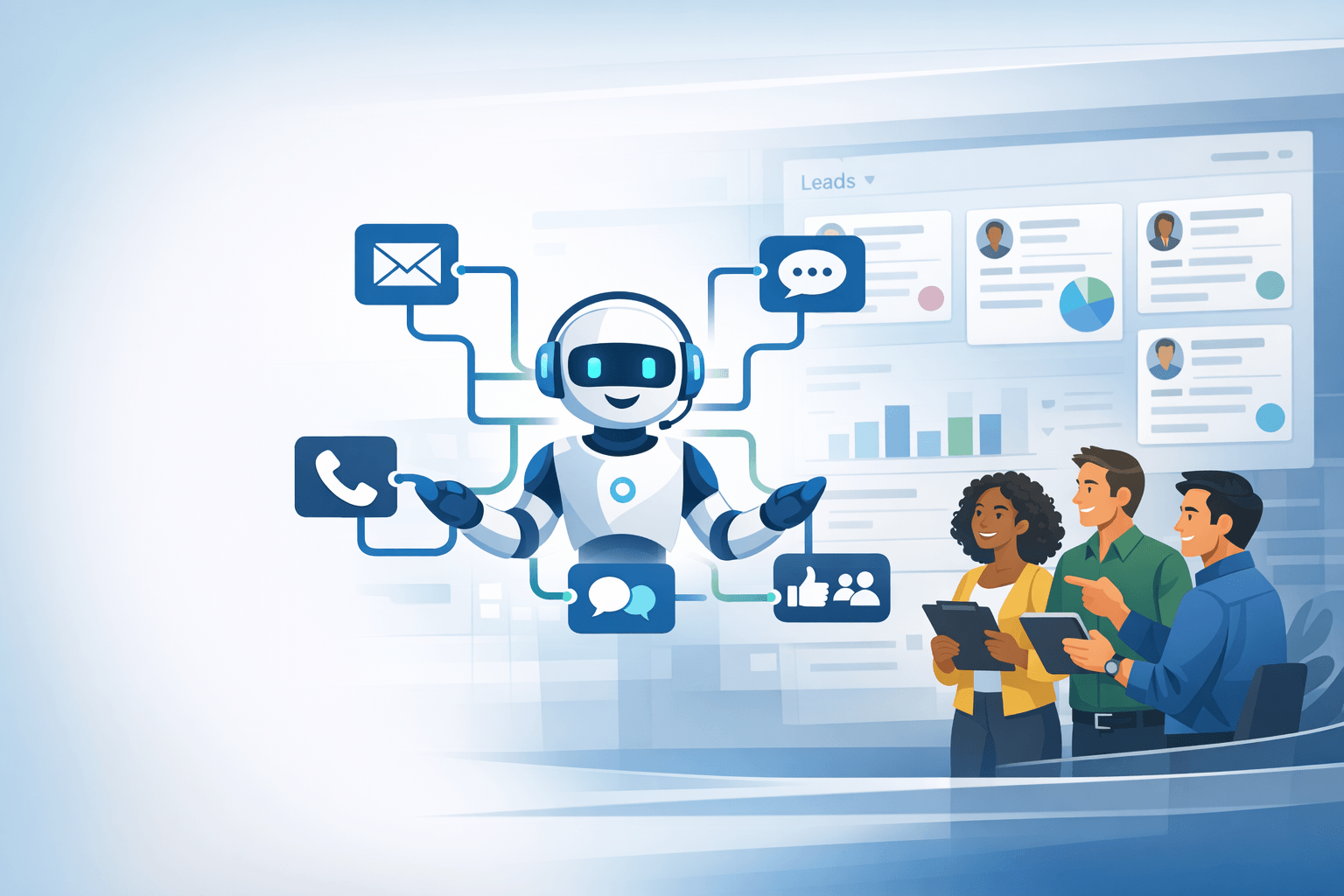
Gone are the days of manually sifting through website forms and event lists. AI agents now monitor every digital touchpoint, including websites, chatbots, social media, and even voice calls, to capture leads instantly. They use advanced algorithms to score and qualify leads in real time, ensuring only the most promising prospects reach your sales team (LinkedIn).
Example:
A visitor downloads a whitepaper on your site. Within seconds, an AI agent analyzes their company, role, and engagement history, then assigns a lead score and routes them to the right nurture sequence.
2. Hyper-Personalized Nurturing at Scale
AI agents don’t just automate emails. They craft personalized, context-aware messages across channels. By analyzing behavioral data, purchase history, and even sentiment, they deliver the right message at the right time, dramatically increasing engagement.
Example:
An AI agent notices a lead has interacted with your pricing page multiple times. It triggers a tailored email offering a demo, followed by a chatbot conversation to answer objections in real time.
3. Intelligent Lead Routing and Handoff
No more “lead limbo.” AI agents evaluate lead readiness and automatically assign them to the most suitable sales rep based on territory, expertise, and workload. This ensures hot leads are never left waiting.
Example:
A qualified lead from a Fortune 500 company is instantly routed to your enterprise sales specialist, complete with a summary of their interactions and recommended next steps.
4. Predictive Analytics and Next-Best Actions
Agentic AI leverages predictive analytics to forecast which leads are most likely to convert and what actions will move them forward. This empowers sales teams to focus their efforts where it matters most.
Example:
The AI agent flags a dormant lead as “likely to re-engage” based on new activity on LinkedIn, prompting a personalized outreach from the sales team.
5. Seamless CRM Integration and Workflow Automation
AI agents now act as the connective tissue between marketing, sales, and customer service platforms. They update records, schedule meetings, and even log call notes automatically, freeing up human reps to focus on building relationships (Google Cloud).
Example:
After a sales call, the AI agent transcribes the conversation, updates the CRM with key insights, and schedules a follow-up based on the lead’s preferences.
The Business Impact: Numbers That Matter
• Productivity Boost: Companies using AI agents report a 40% increase in sales productivity and a 35% reduction in lead response time (Forbes).
• Higher Conversion Rates: Personalized, timely follow-ups driven by AI have led to a 25% uptick in lead-to-customer conversions (Salesforce).
• Cost Savings: Automating repetitive tasks with AI agents has cut operational costs by up to 30% for leading enterprises (World Economic Forum).
Challenges and Considerations
While the benefits are clear, adopting AI agents for lead management is not without hurdles.
• Data Privacy: With AI agents handling sensitive customer data, robust privacy and compliance measures are essential.
• Change Management: Teams need training and buy-in to trust AI-driven processes.
• Integration Complexity: Seamless integration with legacy systems can be challenging but is critical for success.
The Future: What’s Next for AI Agents in Lead Management?
Experts predict that by 2028, AI agents will handle over 70% of all lead interactions, with human reps focusing on high-value, complex deals (MIT Sloan). As agentic AI continues to evolve, expect even deeper personalization, proactive outreach, and integration with emerging technologies like augmented reality and voice AI.
Conclusion: Embrace the AI Agent Revolution
The message is clear. AI agents are not just a passing trend. They are the new standard for lead management in 2026. Businesses that embrace this technology are seeing faster growth, happier sales teams, and more satisfied customers. If you haven’t started your AI journey yet, now is the time to explore how agentic AI can transform your lead management strategy.
Ready to future-proof your sales pipeline? Start evaluating AI agent solutions today and stay ahead of the competition.
**
Related Articles
Continue exploring more insights on lead management