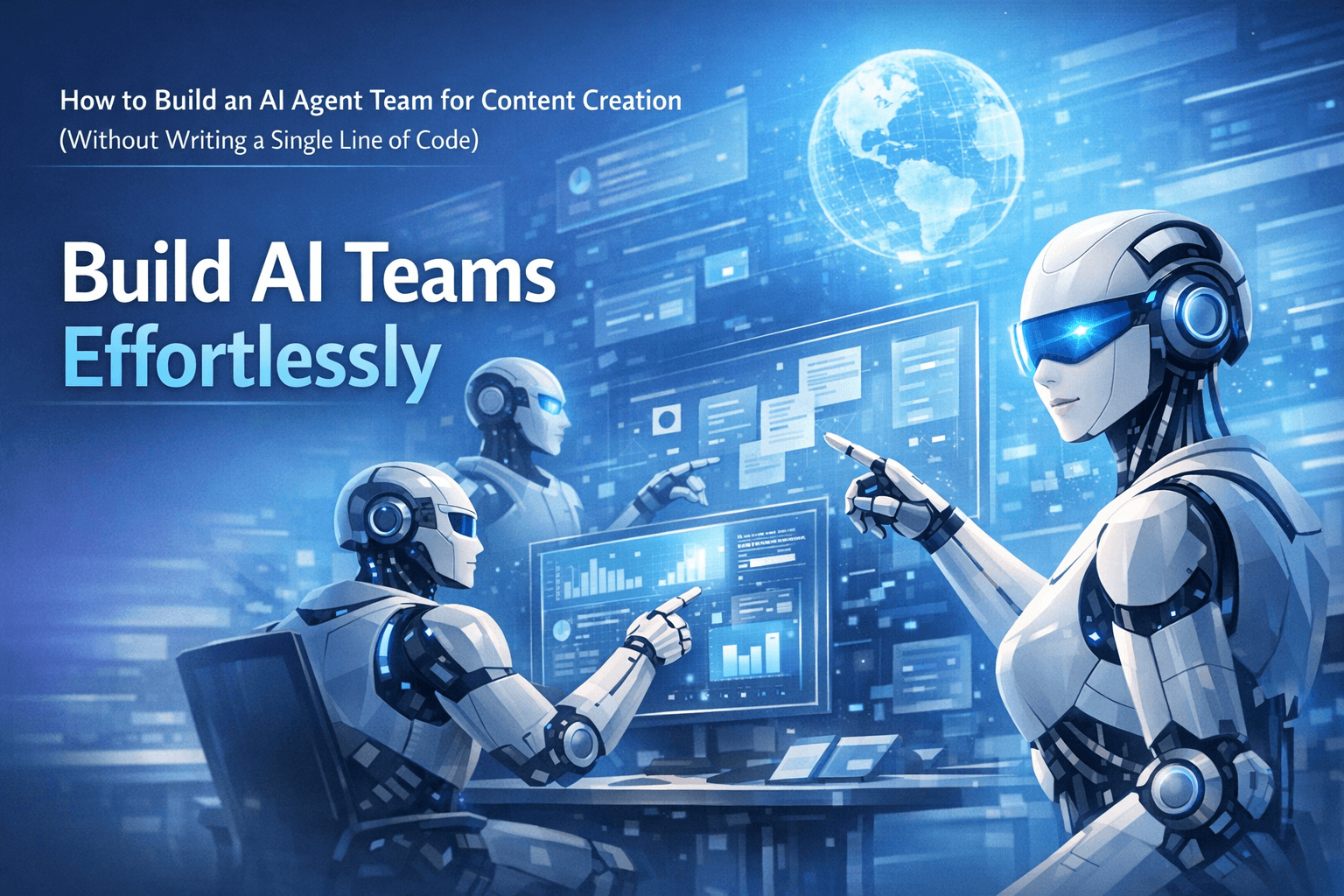
How to Build an AI Agent Team for Content Creation
Learn how to build an AI agent team for content creation—no coding needed. Discover roles, workflows, and how AffinityBots makes it effortless.
Content creation used to be a bottleneck. Now, the teams moving fastest are not hiring more writers. They are building AI agent teams that research, write, edit, optimize, and publish content on their behalf, around the clock.
If you have heard the term "AI agent team for content creation" and wondered what it actually means in practice, or whether it is something your team can realistically pull off, this guide is for you. No fluff, no PhD required.
If you want the higher-level architecture view first, AI Agent Teams in 2026 lays out the core coordination model these content workflows build on.
What Is an AI Agent Team for Content Creation?
An AI agent team is a group of specialized AI agents, each assigned a distinct role, working together inside an automated workflow. Instead of one general-purpose chatbot doing everything poorly, you get a coordinated system where every agent is focused on what it does best.
Think of it like a real editorial team:
- A researcher digs up facts, statistics, and competitive angles
- A strategist maps keywords and search intent
- A writer drafts the actual content
- An editor checks tone, grammar, and brand voice
- A publisher formats, tags, and distributes the final piece
The difference? This team does not sleep, does not have off days, and can produce a full content pipeline in the time it used to take to write one article.
Why Content Teams Are Switching to Multi-Agent Workflows
Single-agent setups, where one AI handles everything, have a ceiling. They struggle with complex, multi-step tasks because each step requires different context, expertise, and logic.
Multi-agent frameworks break that ceiling. According to Blue Prism's 2026 research on AI agent trends, the future of automation is explicitly multi-agent: systems where agents collaborate, pass context, and share outputs to handle tasks that no single model could do well alone.
For content creation specifically, the benefits are pretty clear:
- Speed: A coordinated AI agent team can compress a week-long content workflow into hours
- Consistency: Agents follow the same brand voice and style guidelines every single time
- Scalability: Spin up more runs without adding headcount
- Quality signals: Specialized agents catch what generalist prompts miss, things like SEO gaps, factual errors, and weak CTAs
This is the same reason broader multi-agent orchestration beats a one-bot setup in many business workflows, which we explore in Unlocking Productivity.
According to Master of Code's 2026 AI Agent Statistics report, companies deploying multi-agent systems are already seeing measurable ROI gains across content and marketing functions. Content operations are among the most immediate beneficiaries.
The Core Roles in a Content Creation AI Agent Team
Building your team starts with defining roles. Here is the setup that works well for most content operations:
1. The Research Agent
This agent scours the web, competitor content, and knowledge bases to gather topic angles, trending subtopics, relevant statistics, and competitive gaps worth targeting.
2. The SEO Strategy Agent
Armed with the research, this agent maps out primary and secondary keywords, identifies search intent (informational, transactional, navigational), and recommends a content structure, including which headings, FAQs, and schema elements to use.
3. The Writing Agent
The workhorse. It takes the research brief and SEO strategy, then produces a full draft in the defined brand voice and format. Introduction, body, subheadings, conclusion, all of it.
4. The Editing and QA Agent
This agent reviews the draft for grammar, clarity, and style consistency. It also checks keyword placement and density, flags passive voice, and notes any factual claims that need verification before publishing.
5. The Publishing and Distribution Agent
The final step. This agent formats content for the CMS or platform, adds metadata, generates social captions, and triggers distribution, whether that means pushing to a blog, scheduling social posts, or pinging a Slack channel.
How to Set This Up Without Code: Enter AffinityBots
Here is where most guides lose people. They describe a beautiful multi-agent architecture and then tell you to go learn Python, set up LangChain, and manage your own infrastructure. That is a significant lift for most marketing and content teams.
AffinityBots takes a different approach. It is a no-code AI automation platform built for teams who want the power of multi-agent workflows without becoming engineers. Here is how the pieces map to your content team:
Agents
In AffinityBots, you configure each agent individually. You give it a role, a set of instructions, access to specific tools, and a connected knowledge base. Your research agent gets web search. Your writing agent gets your brand voice document. Your editor gets your style guide. Each one stays in its lane.
Workflows
AffinityBots lets you wire those agents into a unified workflow, a defined sequence where one agent's output feeds directly into the next. Your research agent hands off to your SEO strategist. Your strategist feeds your writer. The whole pipeline runs on its own once you kick it off.
Knowledge and Smart Tables
Every agent on your team can be enriched with documents like brand guides, tone references, and product sheets, plus structured data via Smart Tables. This means your writing agent never goes off-brand and your editor always has the right checklist in front of it.
Tools and Integrations
Agents in AffinityBots connect to built-in tools like web search, PDF extraction, image generation, and URL scraping. They also connect to external services through API integrations or MCP (Model Context Protocol) servers. That means your publishing agent can talk directly to your CMS, email platform, or social scheduler without any manual intervention.
Triggers and Deployment
You can kick off a workflow manually, on a schedule, via webhook, or through a public endpoint. That flexibility makes it straightforward to plug your AI content team into whatever stack you are already running.
No servers to manage. No code to write. Just configure, connect, and run.
If you are still deciding whether your team needs multiple agents or just a cleaner workflow, Agents vs. Workflows helps draw that line.
A Sample Workflow: Blog Post From Brief to Published
To make this concrete, here is what a full blog post workflow looks like in AffinityBots:
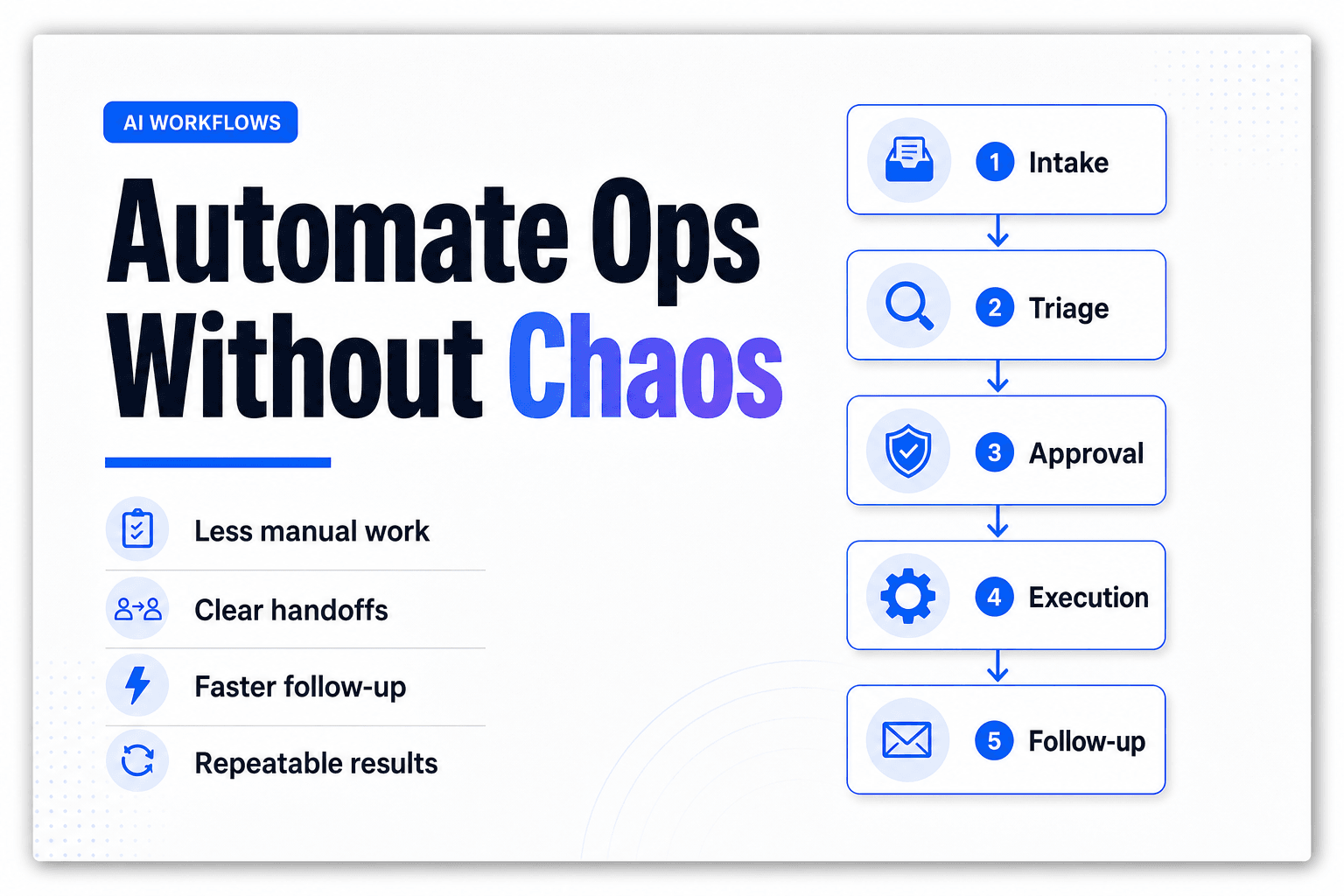
- Trigger: You submit a topic and target keyword via a form or Slack command
- Research Agent: Pulls competitor content, trending angles, and relevant statistics
- SEO Agent: Maps primary keyword, secondary keywords, intent, and outline structure
- Writing Agent: Drafts the full article using the brief and brand voice knowledge base
- Editor Agent: Reviews the draft for quality, flags passive voice, confirms keyword placement
- Publishing Agent: Formats the post, generates the meta description and slug, pushes to CMS
Total human time involved: submitting the brief and approving the final draft.
Common Mistakes to Avoid When Building Your AI Content Team
Even with the right platform, there are a few traps worth avoiding:
Giving every agent the same instructions. Specialization is the whole point. Keep each agent's prompt tight and role-specific. A research agent and a writing agent should sound nothing alike under the hood.
Skipping the knowledge base. Agents without brand context write generic content. Upload your style guide, tone examples, and product documentation before you run anything.
Ignoring the handoff. The quality of your workflow depends on how clearly one agent's output is structured for the next. Use consistent output formats so agents downstream can actually parse them without confusion.
Not reviewing outputs. AI agent teams are powerful, but they are not perfect. Build in a human review step, especially for anything going live publicly, until you have enough confidence in the system's output quality to loosen the reins.
Frequently Asked Questions
What is an AI agent team for content creation? It is a coordinated group of specialized AI agents, each assigned a distinct content role (research, writing, editing, publishing), that work together inside an automated workflow to produce content faster and more consistently than a single-agent or manual process ever could.
Do I need coding skills to build an AI agent team? Not with the right platform. AffinityBots is designed for non-technical users. You configure agents, connect tools, and build workflows through a visual, no-code interface.
How many agents do I need for a content creation workflow? Most effective content pipelines use between three and six agents. The essentials are a research agent, a writing agent, and an editing agent. Adding an SEO strategist and a publishing agent rounds out a solid end-to-end system.
Can an AI agent team match my brand voice? Yes, if you give it the right context. In AffinityBots, you can upload brand voice documents and style guides directly to individual agents so they reference that material in every single run.
Is an AI agent team suitable for small teams? Absolutely. Small teams often see the biggest gains because they are replacing the most manual effort. A two-person content team with an AI agent workflow can realistically produce the output of a team five times its size.
What kind of content can an AI agent team produce? Blog posts, social media content, email newsletters, product descriptions, video scripts, SEO landing pages, FAQs, press releases, and more. If it follows a repeatable structure, an agent team can handle it. MindStudio's breakdown of AI agents for marketing teams has a solid overview of the content types teams are automating right now.
The Bottom Line
Building an AI agent team for content creation is no longer an enterprise-only capability reserved for companies with full engineering departments. Platforms like AffinityBots have made it accessible to any content or marketing team willing to spend a few hours on the right configuration.
The competitive advantage is real and it compounds over time. Every week your team runs manually, a competitor with an agent team is publishing more, ranking faster, and doing it all with fewer resources.
You do not need to overhaul your entire operation overnight. Start with one workflow, whether that is a blog post pipeline, a social content engine, or a newsletter draft process, and build from there.
For a more general list of automations worth tackling before you build a full editorial team, Automating Content Creation with AI Agents is a good next read.
AffinityBots makes that starting point as low-friction as it gets.
Ready to build your AI content team? Explore AffinityBots and start your first workflow today.
Related Articles
Continue exploring more insights on ai automation