Multi-Agent Systems in Business 2026: Benefits, Use Cases, and ROI
Explore how multi-agent systems in business 2026 improve automation, decision-making, and ROI across enterprise teams.
Most businesses have already experimented with AI. The bigger question in 2026 is what happens after the pilot phase.
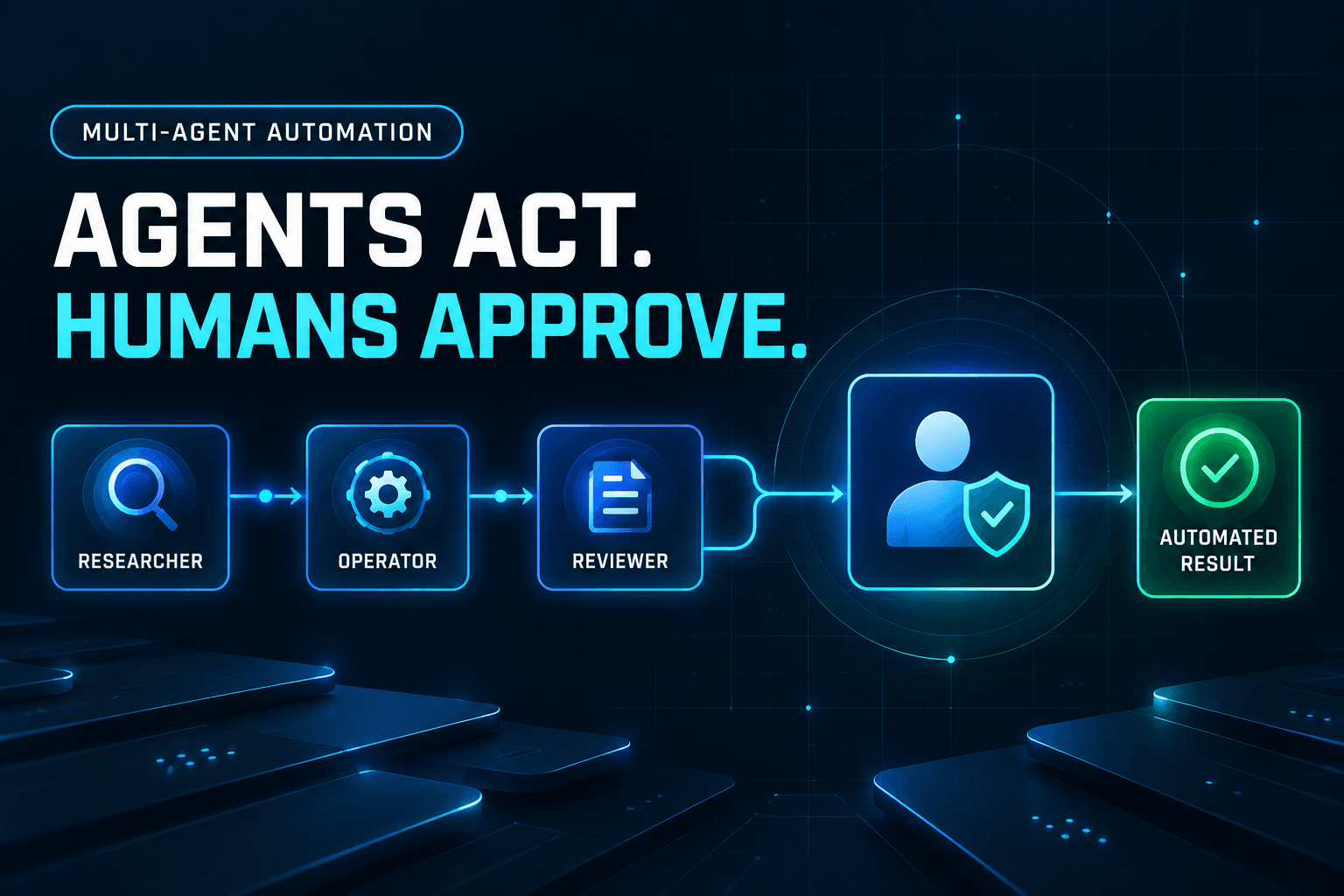
For many teams, the answer is not one bigger, smarter assistant. It is a coordinated system of specialized AI agents that each handle part of the job. One agent researches. Another validates. Another writes, routes, or takes action inside business tools. Together, they work more like a real team than a standalone chatbot.
That shift is why multi-agent systems in business 2026 has become such an important topic for operators, CIOs, and automation leaders. As workflows grow more complex, businesses need AI that can move across steps, systems, and decisions without losing context.
What are multi-agent systems?
A multi-agent system, often shortened to MAS, is a setup where multiple AI agents work together toward a shared goal. Each agent has a focused role, such as research, planning, analysis, retrieval, writing, routing, or execution. If you want a deeper practical breakdown, AI agent teams in 2026 walks through how these systems operate in real workflows.
Compared with a single-agent setup, a multi-agent approach offers a few clear advantages:
- Specialization by task
- Better coordination across multi-step work
- More reliable outputs through division of labor
- Easier scaling for complex workflows
In practical terms, one agent might gather information, another might check it against business rules, and a third might update a CRM, trigger a workflow, or draft a response for review. That structure mirrors how strong teams already operate.
Why 2026 feels like a turning point
AI is no longer being judged on whether it can generate content. It is being judged on whether it can help the business move faster, make better decisions, and reduce manual work.
That is where single-agent setups often hit a wall. They can be useful for one-off tasks, but they tend to struggle when a workflow involves multiple handoffs, systems, approvals, and context changes. Multi-agent systems are better suited to that kind of work because they divide responsibility instead of forcing one model to do everything.
Recent industry coverage points in the same direction. Forbes described multi-agent AI systems as an architectural shift in enterprise computing. Solace has emphasized the need for real-time context and event-driven architecture. OneReach has explored what will shape enterprise AI agents going forward. Technology.org highlighted 2026 as a breakout year for AI systems that work as a team, and a LinkedIn industry overview pointed to strong adoption potential across multiple sectors.
The pattern is easy to spot. As companies expect more from AI, they are moving away from isolated assistants and toward coordinated systems.
Where businesses are seeing the biggest value
Multi-agent systems are not limited to one industry. They are gaining traction anywhere work depends on repeated decisions, fragmented systems, and large volumes of information.
Finance and banking
Financial teams are exploring coordinated agents for fraud monitoring, customer support, document review, and internal reporting. One agent can retrieve account context, another can flag anomalies, and a third can prepare next-step recommendations for human review.
Healthcare and life sciences
Healthcare organizations are testing multi-agent workflows for intake, scheduling, records retrieval, and research support. In life sciences, teams can use specialized agents to summarize literature, organize findings, and support operational coordination. For regulated use cases, human oversight still matters, especially where patient, legal, or compliance risk is involved.
Logistics and supply chain
Logistics is a natural fit because conditions change constantly. Multi-agent systems can track inventory, monitor delays, evaluate impact, reroute decisions, and alert the right teams when something shifts. That is hard to do well with a single assistant operating in isolation.
Manufacturing
Manufacturers are using AI teams for maintenance scheduling, quality checks, production reporting, and exception handling. A multi-agent model can connect machine data, operating rules, and approval paths more effectively than a one-size-fits-all assistant.
Retail and customer operations
Retail teams can deploy agents across merchandising, support, demand planning, and post-purchase service. The result is often faster execution behind the scenes and a more consistent customer experience out front.
The most useful business use cases
The strongest multi-agent use cases tend to share one trait: clear handoffs.
Here are some of the most practical examples:
- Customer support orchestration: one agent classifies the issue, one retrieves the right knowledge, one drafts a reply, and one routes escalation if needed. For concrete support-focused patterns, see AI agent teams for customer support.
- Sales operations: one agent researches accounts, one qualifies leads, one personalizes outreach, and one updates CRM records.
- Internal knowledge workflows: one agent finds policy documents, another summarizes them, and a third answers employee questions with citations.
- Research and reporting: one agent gathers source material, one compares findings, one builds the summary, and one formats the final output.
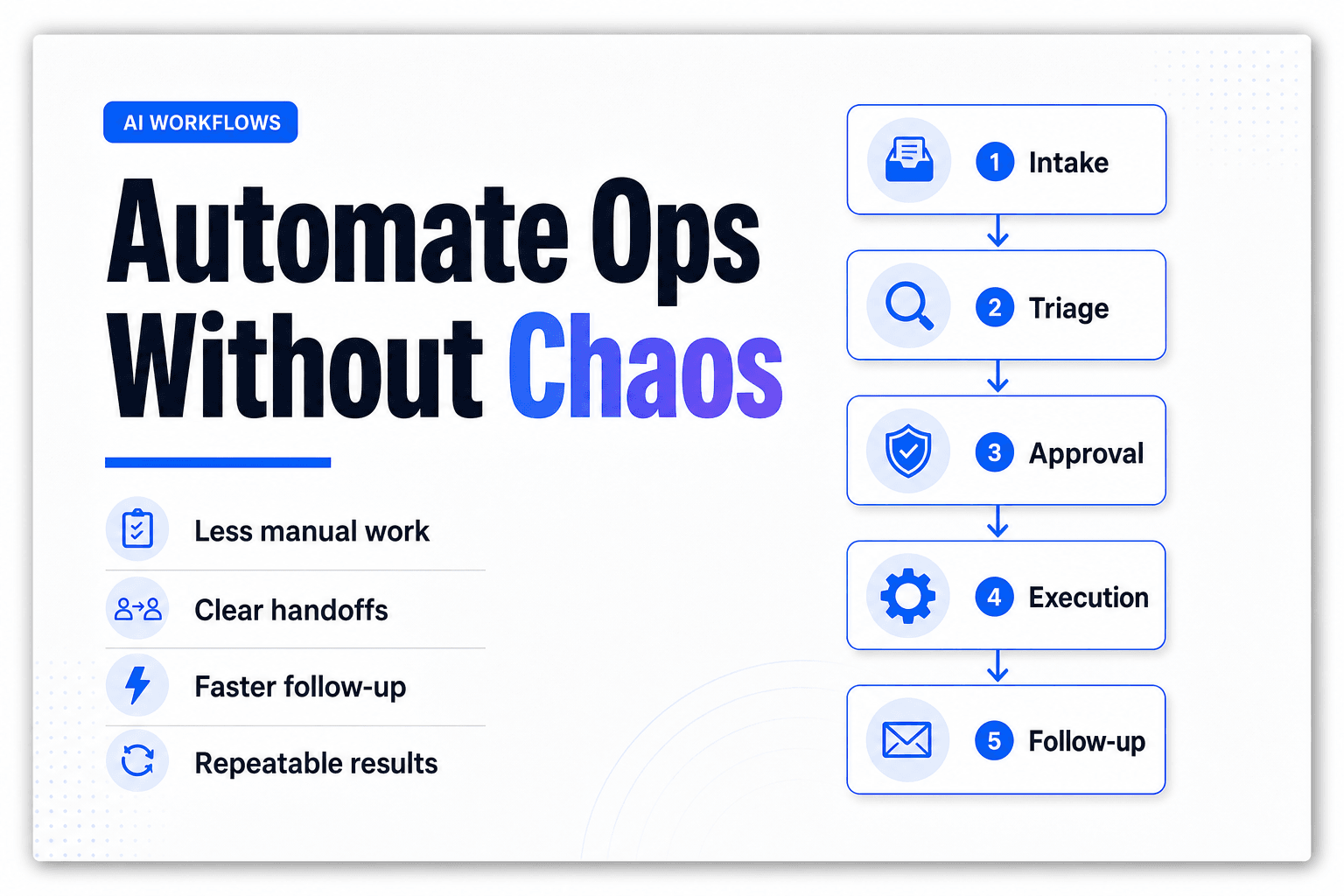
- Process automation: one agent watches for triggers, another applies business rules, and another takes action in connected systems.
The point is not to create more AI for the sake of it. The point is to assign the right job to the right agent, then connect those roles in a way that makes the workflow faster and more dependable.
What ROI actually looks like
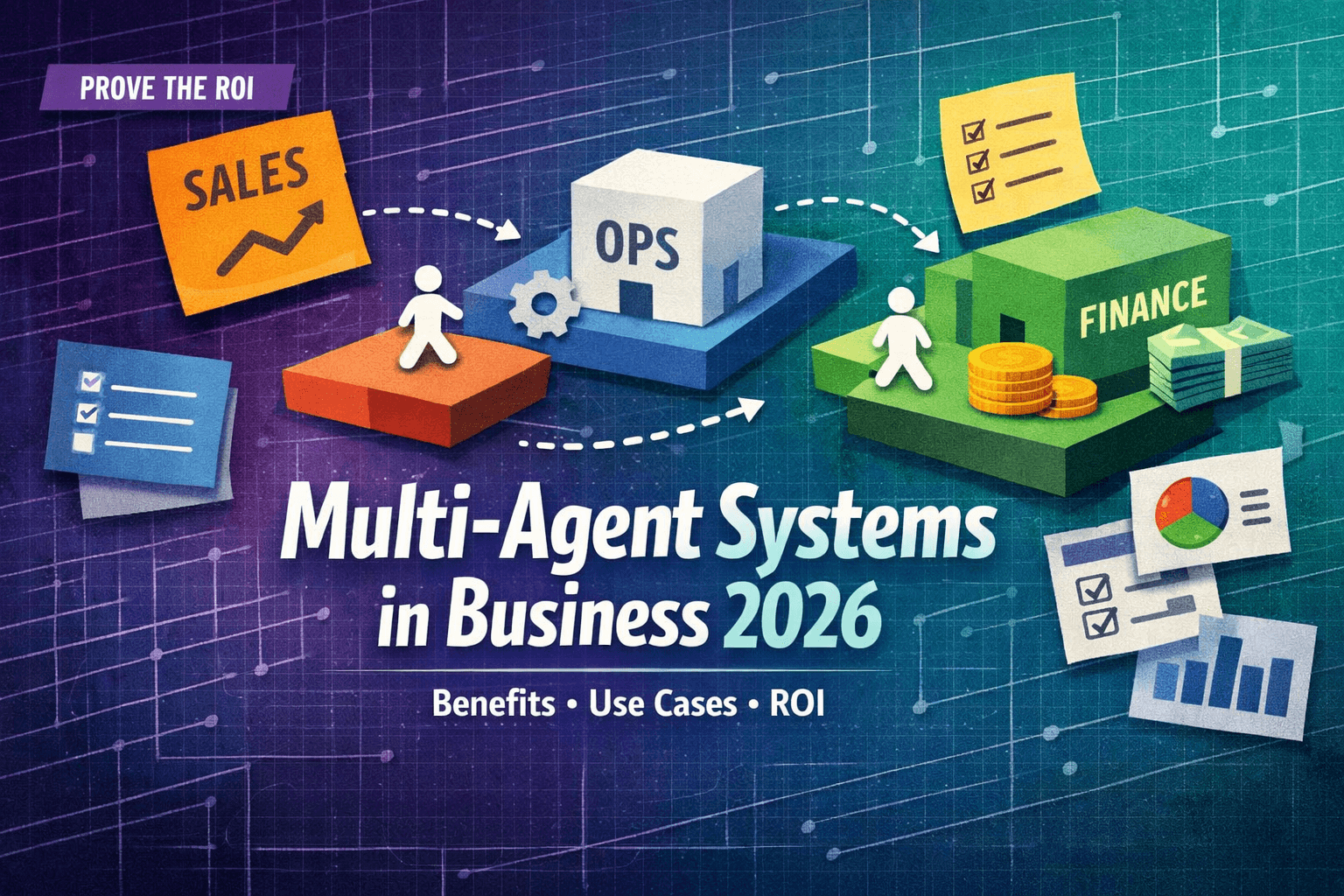
The ROI of multi-agent systems usually shows up in three places: time savings, throughput, and consistency.
Businesses pursue MAS because they can help teams:
- Reduce manual handoffs
- Speed up response times
- Improve workflow coverage at higher volumes
- Free staff for higher-value work
- Standardize execution across teams
The best ROI usually comes from workflows that already have obvious friction. If a process involves research, validation, approvals, updates, and reporting, there is a good chance a team of specialized agents can improve it.
That said, the strongest results usually do not come from trying to automate everything at once. They come from starting with one constrained workflow, measuring outcomes, and expanding only after the process proves its value.
Why real-time context matters
A multi-agent system is only as useful as the information it can access.
Static prompts are not enough for live business operations. Agents need current context from documents, APIs, SaaS tools, structured data, and workflow events. Without that, even a well-designed system can make the wrong call at the wrong time.
This is one reason real-time context has become such a prominent theme in 2026 discussions around enterprise AI. When agents are coordinating across multiple steps, stale information quickly becomes expensive.
Platforms built for orchestration are better positioned here because they combine knowledge retrieval, tool access, workflow logic, and structured data. AffinityBots fits that model by letting teams configure agents, connect them into workflows, attach knowledge sources, use Smart Tables for user-owned structured data, and control how those automations are deployed.
How to get started without overcomplicating it
If your company is evaluating multi-agent systems, keep the first version practical.
1. Start with one workflow
Pick a process with clear steps, repeatable volume, and measurable friction. Support triage, lead qualification, and internal reporting are all solid starting points.
2. Define agent roles clearly
Do not create several agents that all do roughly the same thing. Give each one a specific responsibility, such as researcher, validator, writer, router, or executor.
3. Connect the right context
Agents need access to the systems and materials that actually matter. That may include internal documents, business tools, tables, workflow triggers, and approval logic.
4. Build governance in from day one
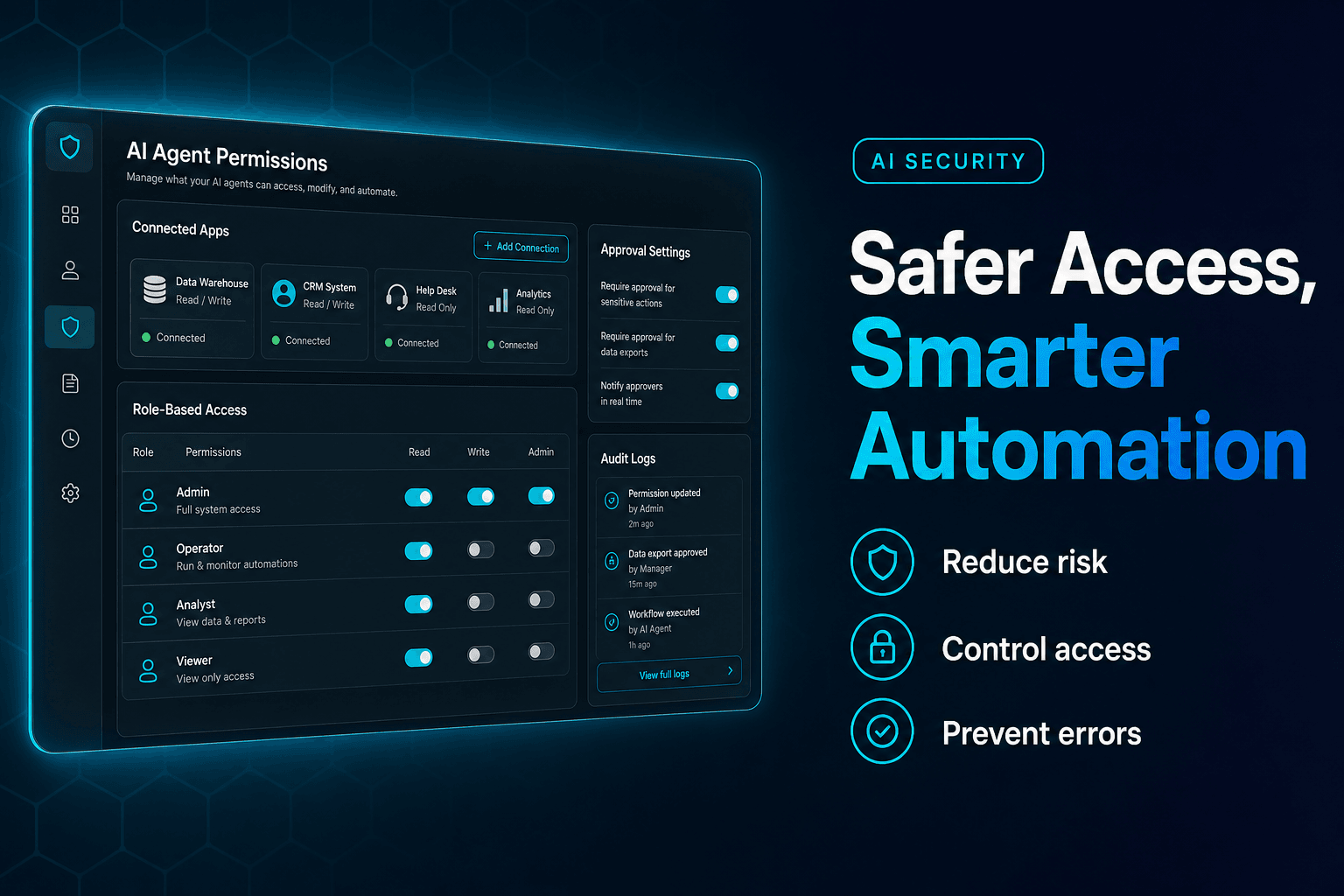
Think through permissions, approvals, fallback paths, and auditability before launch. Good automation is controlled automation.
5. Choose a platform built for orchestration
Look for a system that supports configurable agents, multi-step workflows, knowledge retrieval, structured data, and deployment controls. Those capabilities matter more than flashy demos.
6. Measure before you scale
Track cycle time, quality, exception rates, and business outcomes. Once one workflow is working, expand into adjacent use cases with similar patterns. If you need a rollout framework, AI-first workflows provides a practical implementation checklist.
Common mistakes to avoid
Multi-agent systems can create real value, but they are not plug-and-play magic.
The most common issues include:
- Poorly defined roles between agents
- Weak data quality or incomplete context
- Too much complexity too early
- Integration challenges across business systems
- Security and compliance gaps
- Too little human oversight for sensitive actions
The safest path is usually the most effective one: start narrow, validate performance, and keep people in the loop where judgment matters.
Frequently asked questions
What is the difference between a single AI agent and a multi-agent system?
A single agent handles a broader task flow on its own. A multi-agent system uses several specialized agents that coordinate across steps.
Why are multi-agent systems important in business in 2026?
Because businesses now expect AI to support complete workflows, not just isolated prompts. Multi-agent systems are better suited to work that crosses teams, tools, and decisions.
What kinds of businesses benefit most from MAS?
Organizations with repeatable, multi-step processes usually benefit the most, especially in finance, healthcare, logistics, manufacturing, and customer operations.
How do multi-agent systems improve ROI?
They reduce manual work, speed up execution, improve consistency, and help teams scale complex processes without adding equivalent headcount.
What should companies look for in a MAS platform?
Look for agent configuration, workflow orchestration, tool connectivity, knowledge retrieval, structured data support, and governance controls.
Final thoughts
Multi-agent systems are getting attention in 2026 for a simple reason: they align AI with how businesses actually work.
Real operations depend on specialists, handoffs, systems, rules, and shared context. A multi-agent approach reflects that reality far better than a single assistant trying to manage everything alone.
If your team is planning its next AI initiative, start with one high-friction workflow. Define the agent roles clearly. Connect the right context. Measure the results. Then scale what works.
Related Articles
Continue exploring more insights on ai automation