AI Agent Teams for Lead Management: 2026 Best Practices, Tools, and Real-World Results
Discover how AI agent teams are transforming lead management in 2026. Learn best practices, explore top tools, see real-world examples, and get a step-by-step guide to successful implementation for your sales or revenue team.
If your team still treats lead management like a relay race between disconnected tools, spreadsheets, and overworked reps, you are already behind.
In 2026, the strongest sales teams are not just automating one or two tasks. They are building AI agent teams that work together across the full lead lifecycle, from capture and qualification to routing, follow-up, and reporting. The goal is not to replace salespeople. It is to remove the slow, repetitive work that keeps good reps from doing their best selling.
Done well, an AI agent team can help you respond faster, prioritize better, and keep more opportunities moving. Done poorly, it can create noise, bad handoffs, and a lot of mistrust. That is why strategy matters just as much as software.
This guide breaks down what AI agent teams actually are, where they create the most value, which tools are worth a look, and how to roll them out without making your process more complicated than it needs to be.
What an AI agent team actually is
An AI agent team is a set of specialized AI systems that handle different parts of the same workflow and share context with each other.
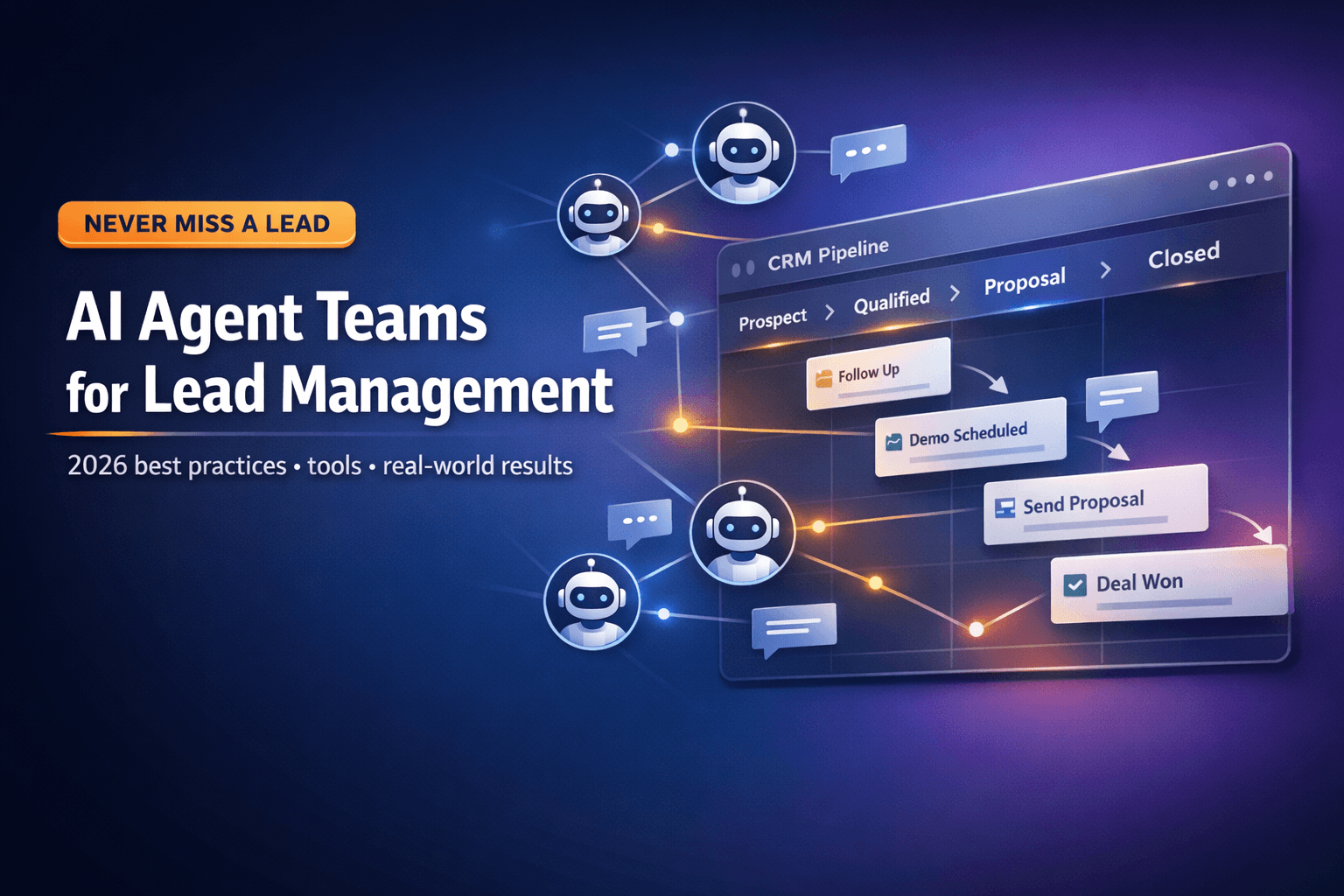
Instead of using one generic bot to do everything, companies split work into roles. One agent might enrich a lead record. Another might score intent and fit. A third might route the lead to the right rep. A fourth might trigger the first follow-up or flag the account for human review.
That role-based approach matters because lead management is not one task. It is a chain of decisions. When those decisions happen in the right order, with the right data, the process feels smooth. When they do not, good leads stall out.
The best setups usually include:
- Lead capture and enrichment agents that fill in missing firmographic or contact data
- Scoring agents that estimate fit, urgency, or buying intent
- Routing agents that send leads to the right rep, team, or sequence
- Follow-up agents that trigger outreach, reminders, or nurture steps
- Analytics agents that monitor response times, conversion rates, and drop-off points
This is the same basic logic behind strong human teams. Clear roles lead to cleaner execution.
For how orchestration, tool use, and coordination work under the hood, see AI agent teams in 2026: how multi-agent systems actually work.
Why AI agent teams matter more in 2026
Lead volume is up. Buyer expectations are higher. Sales teams are being asked to move faster without adding headcount at the same pace.
For a broader view of AI agents across the full lead lifecycle, how AI agents are revolutionizing lead management in 2026 complements this playbook.
That pressure is one reason more revenue teams are starting to treat AI agents like operating teammates instead of one-off tools. A useful example is this piece on why revenue teams are treating AI agents like teammates, which reflects the broader shift happening across modern sales organizations.
The change is practical, not theoretical. Teams want help with tasks that are important but repetitive:
- responding to inbound leads quickly
- cleaning and enriching contact data
- routing based on territory, product line, or account ownership
- triggering personalized follow-up at scale
- spotting bottlenecks before pipeline slows down
These are exactly the kinds of jobs AI agents can handle well when the rules are clear and the systems are connected.
Where teams see the biggest gains
Most companies do not need an AI overhaul. They need relief in a few specific places.
1. Faster first response
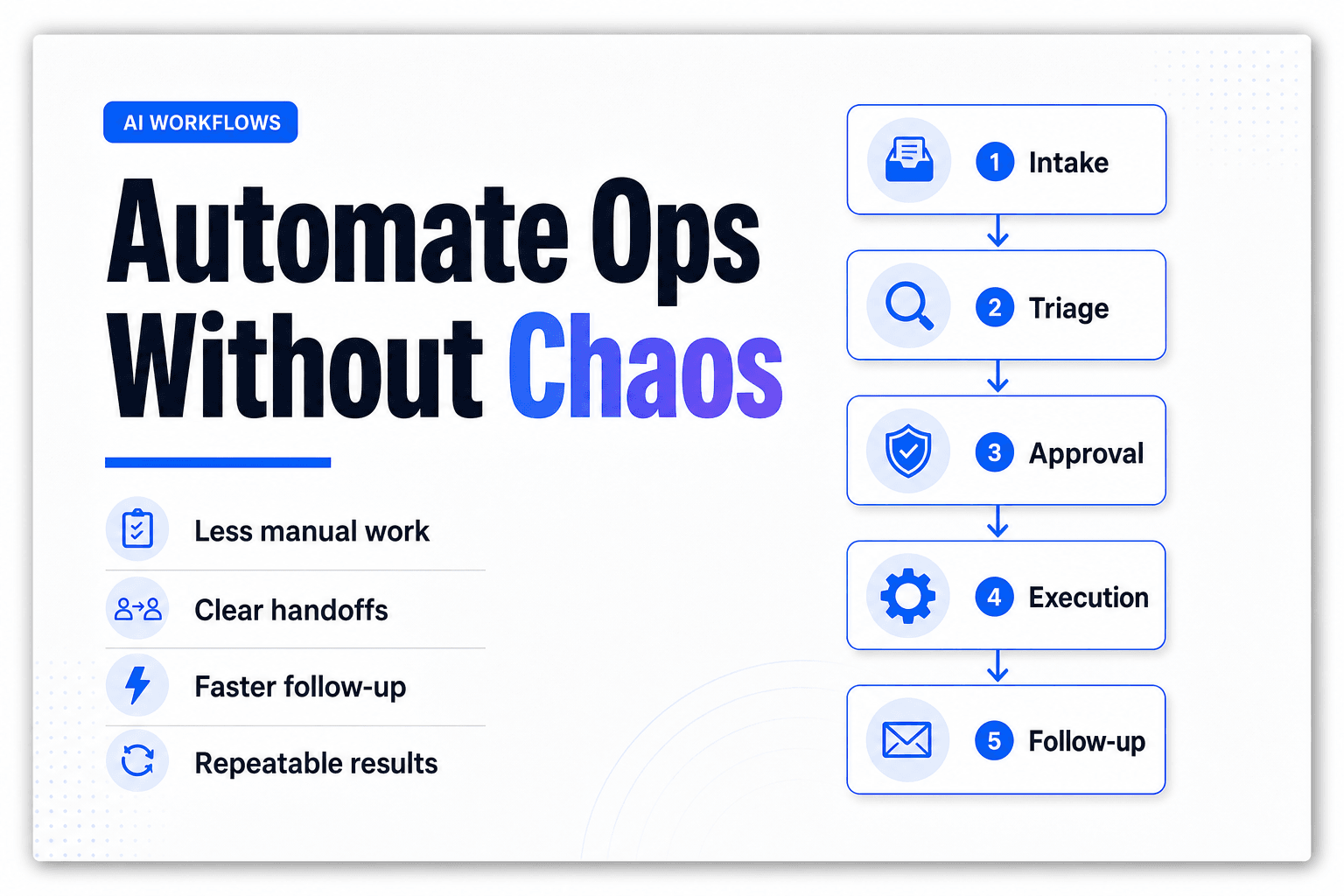
Speed still matters. If a qualified lead waits too long, interest fades or the buyer moves on. AI agents can monitor forms, chat submissions, CRM events, and campaign signals in real time, then trigger the right next step immediately.
That does not mean every response should be fully automated. It means the system should never leave a good lead sitting untouched.
2. Better qualification
Not every lead deserves the same level of attention. Scoring agents can help teams rank leads using firmographics, intent signals, product fit, and engagement patterns. This gives reps a cleaner starting point and reduces time spent chasing low-probability opportunities.
3. More consistent routing
Manual lead assignment creates delays and mistakes. Routing agents apply the rules instantly, whether that means territory-based ownership, named account logic, language matching, or product specialization.
4. Less repetitive admin work
A surprising amount of sales friction comes from tiny tasks no one wants to do: updating records, checking for duplicates, assigning owners, and nudging follow-up. Agent teams are especially effective when they remove that background work without forcing reps to change everything about how they sell.
Real-world patterns from early adopters
Public case studies vary, but the patterns are consistent.
Teams that get the best results usually do three things well:
- They define narrow, useful roles for each agent.
- They connect those agents to the CRM and communication stack.
- They keep humans involved where judgment matters most.
If you want examples of how companies are framing ROI and deployment strategy, Arsum's roundup of AI agent deployments with ROI data is a helpful starting point. It is most useful as directional evidence, not a universal benchmark. Results depend heavily on data quality, process maturity, and team adoption.
That last point is worth stressing. The technology alone does not create the win. The operating model does.
How to implement an AI agent team without creating chaos
The fastest way to fail is to automate a messy process before you understand it. Start smaller.
Step 1: Map your current lead flow
Look at how leads enter your system, who touches them, how fast follow-up happens, where data gets lost, and where handoffs break down.
If you cannot explain your current workflow clearly, do not automate it yet.
Step 2: Pick one or two high-friction use cases
Good starting points include:
- inbound lead routing
- lead enrichment
- follow-up reminders
- simple nurture triggers
- qualification support for SDR teams
These are easier to measure and less risky than trying to automate the entire funnel at once.
Step 3: Define roles, rules, and escalation paths
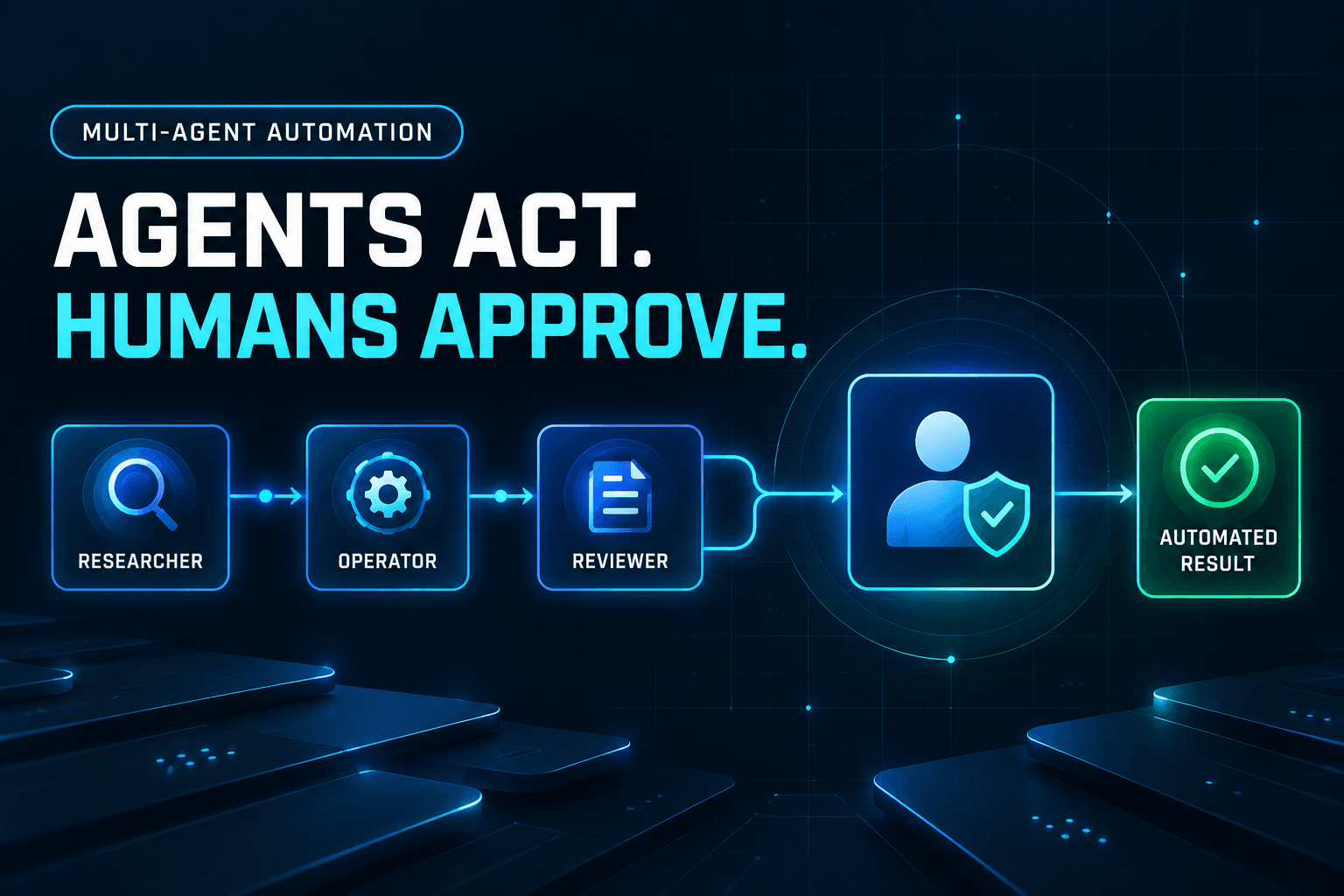
Each agent should have a clear job, a clear trigger, and a clear limit.
For example:
- Enrichment agent fills missing company size, industry, and location fields
- Scoring agent evaluates fit based on predefined criteria
- Routing agent assigns the lead to the correct rep
- Human reviewer steps in when the score is unclear or the account is strategic
That structure keeps agents useful without giving them too much uncontrolled authority.
Step 4: Connect the stack
Your AI agents should not live in isolation. They need access to the systems your team already uses, especially your CRM, marketing automation platform, forms, inboxes, and reporting tools.
If you are exploring orchestration models, this guide on how to build a multi-agent AI team offers a useful high-level framework. For a product-specific look at connected workflows, see how AffinityBots builds multi-agent workflows.
Step 5: Pilot, measure, and tighten
Run a focused pilot before expanding. Track metrics that matter:
- time to first response
- lead-to-meeting conversion
- rep acceptance of routed leads
- percentage of records enriched correctly
- manual hours saved
Do not just ask whether the agents are active. Ask whether they are improving outcomes.
Step 6: Train the humans too
Sales reps, RevOps, and managers need to understand what the agents are doing, when they can override them, and how feedback loops work. Adoption improves when people feel they are gaining support, not losing control.
Common mistakes to avoid
Automating bad data
AI does not fix broken inputs. If your CRM is full of duplicates, outdated ownership rules, or missing fields, the agents will scale those problems faster.
Making the system too complex
A five-agent setup with clear roles is better than a fifteen-agent maze no one understands. Complexity looks impressive in demos and painful in production.
Removing human judgment too early
High-value accounts, edge cases, and unusual buying situations still need people. Human-in-the-loop review is often a strength, not a compromise.
Measuring activity instead of impact
It is easy to celebrate automated tasks. It is harder, and more useful, to measure whether lead quality, speed, conversion, and rep productivity actually improved.
Top tools and platforms to consider in 2026
The right platform depends on your stack, team size, and appetite for customization. That said, a few categories stand out.
- AffinityBots is a strong fit for teams that want configurable, workflow-driven agent orchestration connected to revenue operations. It is especially relevant if your goal is to build coordinated agent roles instead of isolated automations. You can also explore related guidance on AI best practices for revenue operations.
- Outreach remains a familiar option for teams centered on sales engagement and CRM-connected workflows.
- Specialized AI agent platforms such as TeamDay.ai, Shogo, and Everworker may appeal to teams that want different balances of automation, analytics, and orchestration.
- Open-source frameworks can offer flexibility, but they usually require more technical ownership and governance.
When comparing tools, ask simple questions first:
- Can it integrate cleanly with our CRM and communication stack?
- Can we define clear roles for multiple agents?
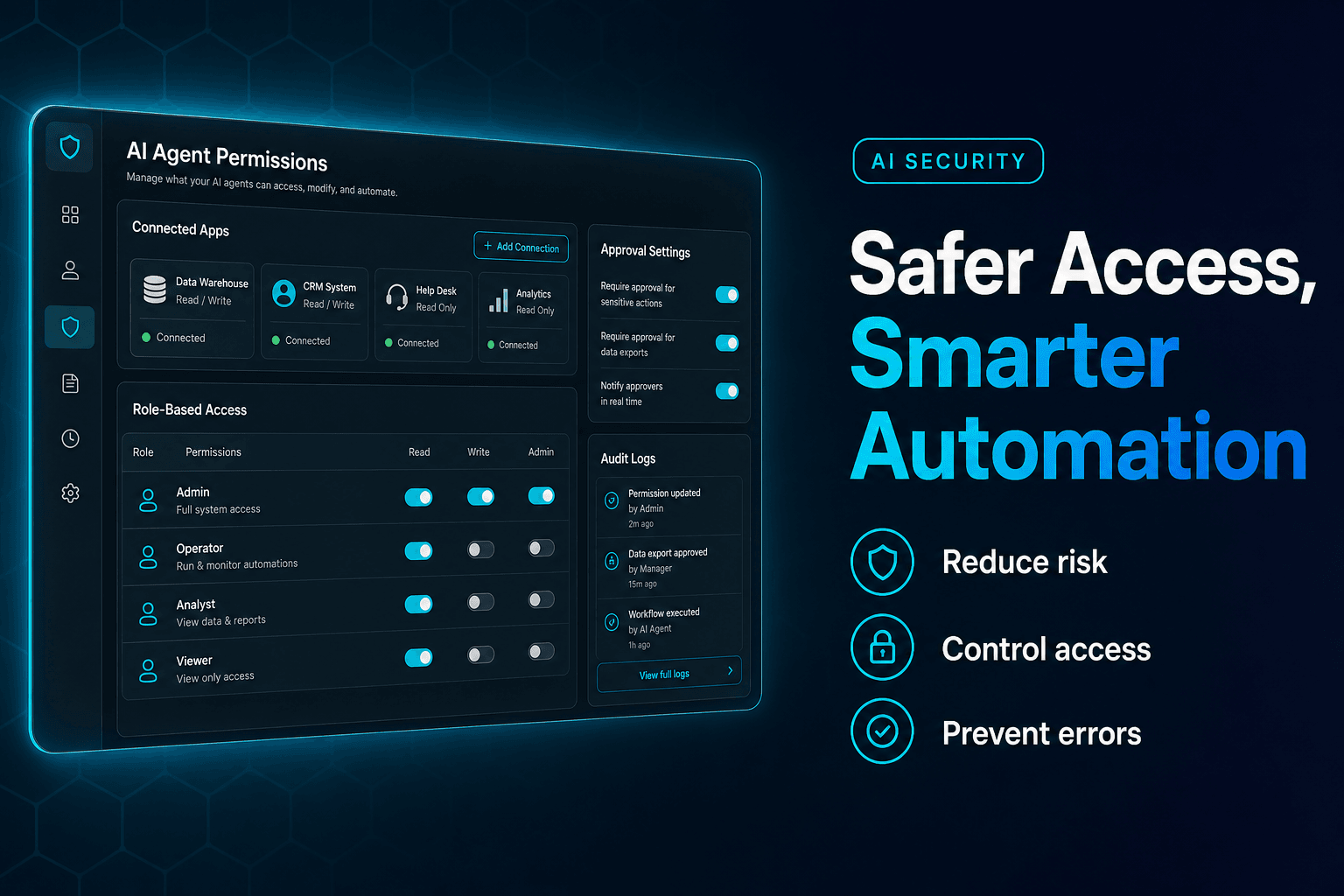
- Can we audit decisions and outcomes?
- Can humans intervene easily?
- Can our team actually operate this after launch?
Final thoughts
AI agent teams are not interesting because they sound futuristic. They are interesting because they can make lead management feel less chaotic, less manual, and far more consistent.
For most companies, the smartest move is not a massive transformation. It is a focused pilot in one part of the workflow where speed, quality, or follow-up is clearly breaking down. Get that right, prove the value, then expand.
If your team is serious about improving lead response, qualification, and handoffs in 2026, AI agent teams are worth a close look. The companies that win with them will not be the ones that automate the most. They will be the ones that automate the right things, with the right guardrails, at the right time.
Related Articles
Continue exploring more insights on ai automation